

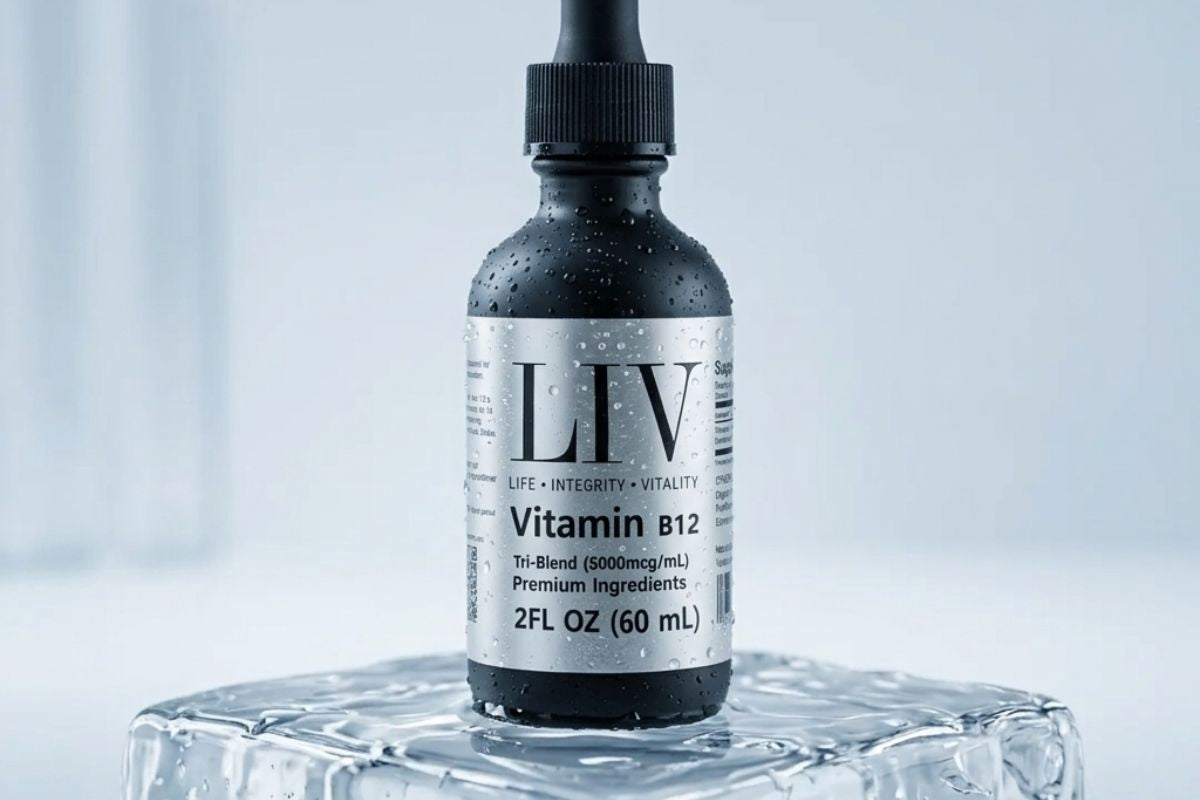
LIV Supplements © CC BY-SA 4.0
Vitamin B12 is one of the few nutrients that exposes a fundamental limitation in plant-based diets. Unlike most vitamins, it cannot be obtained through whole foods alone. B12 is not produced by plants, and without deliberate intervention, levels decline over time. This gap cannot be closed through diet alone, no matter how disciplined or nutrient-dense it might be.
Early symptoms such as mild fatigue and sharpness are easy to overlook, but beneath the surface, B12 plays an important role in nerve function, blood cell formation, and DNA synthesis. When levels drop, these systems break down gradually but cumulatively. Left unaddressed, the effects can escalate into neurological impairment that is significantly harder to reverse.
For vegetarians and vegans, this shifts B12 from a secondary concern to a primary one. The question is no longer whether to address it, but how to do so reliably and biologically. Understanding the difference between simply consuming B12 and absorbing it is what will ultimately determine long-term health outcomes.
Summary
Vitamin B12 stands out as a critical nutrient that plant-based diets simply can’t supply through whole foods alone. For vegans and vegetarians, this creates a significant nutritional gap with neurological and metabolic consequences when left unaddressed. While fortified foods such as plant-based milks and cereals can help, their effectiveness depends on consistent intake and proper absorption, two factors that often fall short in daily life. Scientific evidence shows that liquid B12 supplementation provides a reliable way to maintain healthy levels and prevent long-term nerve and cognitive decline. Understanding when and how to take B12 can make all the difference. For anyone following a plant-based diet, B12 isn’t optional, it’s essential for sustaining long-term health, energy, and brain function.
Table of Contents
The Most Effective Way to Take B12
Best Liquid B12 Methylcobalamin
The Best Way for Vegetarians and Vegans to Get B12
Vitamin B12 sits at the intersection of neurological function, red blood cell formation, and cellular energy production, yet for vegetarians and vegans, it presents a unique and unavoidable constraint. Plants do not produce B12. This is not a matter of dietary preference, rather, it’s a biological limitation. B12 is synthesized by microorganisms, not plants, which means plant-based diets must rely on external sources to meet physiological needs.
The consequences of ignoring this gap are not subtle. B12 deficiency disrupts nerve signaling and impairs DNA synthesis, creating a cascade of effects that often begin quietly. Early symptoms include fatigue, brain fog, and tingling sensations in the hands and feet. As deficiency progresses, neurological impairment becomes more pronounced. Memory declines, cognition slows, muscles weaken, coordination falters, and in severe cases, symptoms begin to resemble dementia.
What makes B12 deficiency particularly dangerous is how easily it goes unnoticed. Blood levels decline gradually, and symptoms are often misattributed to stress, aging, and other deficiencies. For those following a plant-based diet, this creates a major risk that cannot be solved through whole foods alone.
Addressing B12 deficiency must be approached as an essential vitamin requiring deliberate intake; intake focused on ensuring it’s absorbed, utilized, and maintained at levels that support long-term neurological health.
Fortified Foods
Fortified foods offer a practical entry point into B12 supplementation, particularly for those transitioning into vegetarian or vegan diets. Breakfast cereals are among the most widely available examples, often delivering B12 in quantities that exceed daily requirements. When paired with fortified plant-based milks, this creates a layered approach that seems sufficient at first glance, however, this approach introduces a critical limitation. Fortification addresses intake, not absorption. The body's ability to extract and utilize B12 depends on a series of physiological steps: adequate stomach acid, intrinsic factor production, and proper intestinal function. If any part of this process is compromised, the amount listed on a nutrition label becomes far less relevant.
There is also the issue of consistency. Fortified foods only work if consumed regularly and in sufficient quantities. Skipping meals, switching brands, and relying on unfortified alternatives can quickly drop intake below necessary thresholds. In areas with limited access to fortified products, this strategy becomes even less reliable.
Fortified foods can play a big role in supplementing B12, but they are not a complete solution. They function best as a supplemental layer rather than a primary strategy. For consistent, measurable B12 status, reliance on fortified foods alone introduces too many variables. When it comes to neurological health, precision matters.
Why Supplementation Is Non-Negotiable
At a certain point, the variability of diet-based strategies gives way to a more controlled approach. Supplementation is not simply a convenience for vegetarians and vegans, it is the most reliable mechanism for maintaining adequate B12 levels.
The logic is straightforward. Supplements deliver a known quantity of B12 in a controlled format, removing uncertainty around intake. More importantly, they allow for optimization of absorption pathways that are often compromised in real-world conditions.
Not all B12 supplements function equally. Traditional tablets must pass through the digestive system, relying on stomach acid and intrinsic factors to be properly absorbed, a process often inefficient. Age, stress, and common medications can all impair this pathway, reducing how much B12 reaches circulation.
Liquid, spray, and sublingual forms offer a more direct route. By absorbing through the tissues of the mouth, they partially bypass the digestive system, increasing bioavailability and reducing reliance on gastrointestinal conditions that may be suboptimal.
There is also the issue of dosage efficiency. The body cannot store unlimited B12 at once, resulting in excess-excretion. How B12 is delivered matters just as much as the amount consumed. Supplementation allows for controlled dosing that aligns with the body's absorption capacity, minimizing waste while maximizing effectiveness.
The Best Way to Take Vitamin B12
The effectiveness of B12 supplementation is not determined solely by dose. Timing, form, and physiological context all influence how much is utilized, and small adjustments can make a big difference.
Taking B12 on an empty stomach is widely considered the most efficient approach. Without competing nutrients and digestive activity, the body can prioritize absorption pathways that are otherwise diluted during meals. Early morning intake aligns with this principle.
Form selection further refines this process. Sublingual tablets, liquid drops, and sprays engage the mucosal tissues of the mouth, reducing dependence on stomach acid and intrinsic factors, both of which vary significantly between individuals. For those with compromised digestive function, this distinction is especially important.
Splitting doses across multiple points in the day can also improve overall utilization. The body absorbs B12 in limited amounts, so spacing intake reduces the likelihood that excess is excreted before use.
External factors matter too. Coffee has been shown to reduce B12 uptake, so taking it separately can help preserve absorption efficiency. Medications are another consideration: antacids and acid-reducing drugs lower stomach acid in ways that directly impair B12 absorption, making sublingual and liquid forms a practical workaround.
The underlying principle is consistency. B12 works best when integrated into a routine that accounts for both biological constraints and daily habits. For vegetarians and vegans, the goal is not maximizing intake in a single moment, but sustaining absorption for months and years to come.
Conclusion
For vegetarians and vegans, vitamin B12 represents a structural gap that must be addressed with intention. Fortified foods can help, but they operate within limits; absorption varies, intake is inconsistent, and small lapses compound over time. What appears sufficient on paper does not always translate into what the body can actually use.
Supplementation, particularly in forms that support direct absorption, offer a level of control that diet alone cannot provide. Timing, dosage, and delivery method all shape the outcome, turning B12 from a passive addition into an actively managed strategy.
The long-term implication is clear. B12 is not something to monitor casually, it requires early stabilization and consistent maintenance. When approached with precision, it becomes a simple nutrient to manage. When overlooked, it becomes one of the most consequential deficiencies a plant-based diet can create.
Get Yours Today —

Topics Discussed: liquid b12 vitamin, liquid b12 drops, b12 for vegans, b12 fortified foods
Frequently Asked Questions
- How do you know if your B12 is low?
- How do vegans get B12 naturally?
- Can you get enough B12 from fortified foods?
- How to avoid B12 deficiency as a vegetarian?
- What affects b12 absorption?
- What is the most effective way to take B12?
How do you know if your B12 is low?
Early signs of B12 deficiency include fatigue, brain fog, and tingling in the hands and feet. As levels continue to decline, the neurological impact becomes more pronounced. Memory may begin to weaken, cognition can slow, and muscle weakness and coordination issues may develop. These symptoms reflect a deeper disruption in nerve function that worsens over time if not addressed.
How do vegans get B12 naturally?
Vegans cannot obtain B12 naturally from whole plant foods. B12 is synthesized by microorganisms; a biological limitation within plant-based diets that requires external sources.
Can you get enough B12 from fortified foods?
Fortified foods can contribute to B12 intake, but they are not a complete solution. Their effectiveness depends on consistent intake, and relying on them alone introduces variability that can make it difficult to maintain stable B12 levels over time.
How to avoid B12 deficiency as a vegetarian?
Avoiding deficiency requires consistency and control. Liquid or sublingual forms can support absorption by allowing for more direct uptake. This approach reduces reliance on dietary variability and helps maintain consistent B12 levels over time.
What affects b12 absorption?
B12 absorption depends on several factors, including adequate stomach acid, intrinsic factor production, and overall intestinal function. These processes can be impaired by age, stress, and medications such as antacids. Even factors such as coffee consumption can reduce how much B12 the body absorbs.
What is the most effective way to take B12?
Taking B12 on an empty stomach is generally considered most efficient for absorption. Liquid B12 drops can further support this process by allowing absorption through the mouth, rather than relying entirely on digestion. Splitting doses throughout the day can also improve utilization by aligning with the body’s absorption capacity.


